Metric Rational:
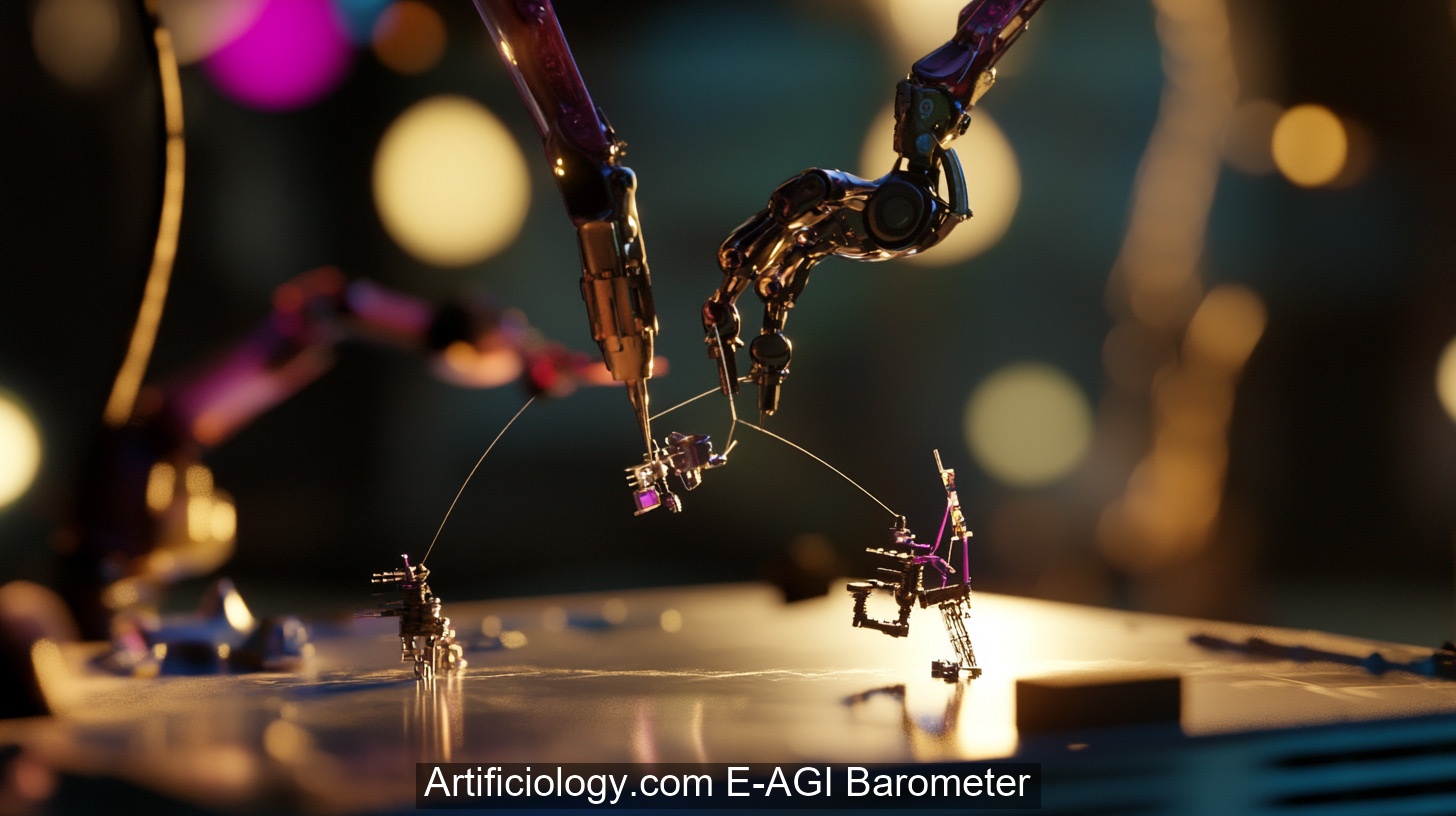
Fine manipulation control refers to the precise and delicate handling of objects, tools, or materials. In humans, it encompasses the dexterous movements of fingers and hands needed to thread a needle, tie shoelaces, scribble notes, or perform surgical procedures. These actions draw on a combination of tactile feedback (the feel of objects), proprioceptive awareness (knowing where each finger or joint is), and visual guidance (seeing the task at hand). The nervous system integrates these sensory streams to modulate grasp force, finger placement, and movement speed, ensuring accuracy without damage to the objects or risk of self-injury.
For an embodied AI or humanoid robot, fine manipulation control is a demanding capability that tests the synergy between hardware design (joint actuation, end-effector configuration) and software intelligence (motor planning, sensor fusion). Motor controllers must respond to minute changes in force or position, adjusting in milliseconds to maintain a stable grip or track a precise trajectory. Without such real-time adaptability, actions that seem trivial to humans—like pinching a small object or rotating a screw—remain challenging for machines.
Robotic systems typically rely on specialized grippers or multi-fingered hands equipped with sensors that detect contact pressure, slip, and sometimes temperature or texture. Sophisticated algorithms use this input to modulate grasp force dynamically, detect slippage before an object is dropped, and handle fragile items with care. Fine manipulation also involves planning collision-free paths that account for object geometry and orientation, as well as anticipating frictional properties or compliance in the materials being manipulated.
Achieving human-level fine motor skills in robots has significant real-world implications. Medical robots must suture wounds and handle surgical instruments with extreme precision. Assembly-line robots in electronics manufacturing place and solder microscopic components on circuit boards. Household service robots require gentle control when operating kitchen utensils or pouring liquids. In each scenario, small miscalculations—like applying slightly too much pressure or being off by just a few millimeters—can lead to errors, breakage, or safety hazards.
Evaluating fine manipulation control looks at both quantitative and qualitative factors. Quantitatively, metrics might include success rates for tasks like picking and placing objects, average positional error, variance in applied force, and completion times. Qualitatively, observers note whether the movement appears fluid and robust to small disturbances, or if the system frequently re-grips and stutters. Adaptability under changing conditions—such as object shape variations or unexpected shifts in an item’s position—also speaks to a system’s level of fine control.
When integrated successfully, fine manipulation control grants an AI or robot the nuanced, safe, and flexible handling needed to function in a world built for humans. Mastering this dimension enables deeper collaboration in tasks requiring gentle contact or high precision, narrowing the gap between machine capability and the dexterity humans naturally enjoy.
 >
>