Metric Rational:
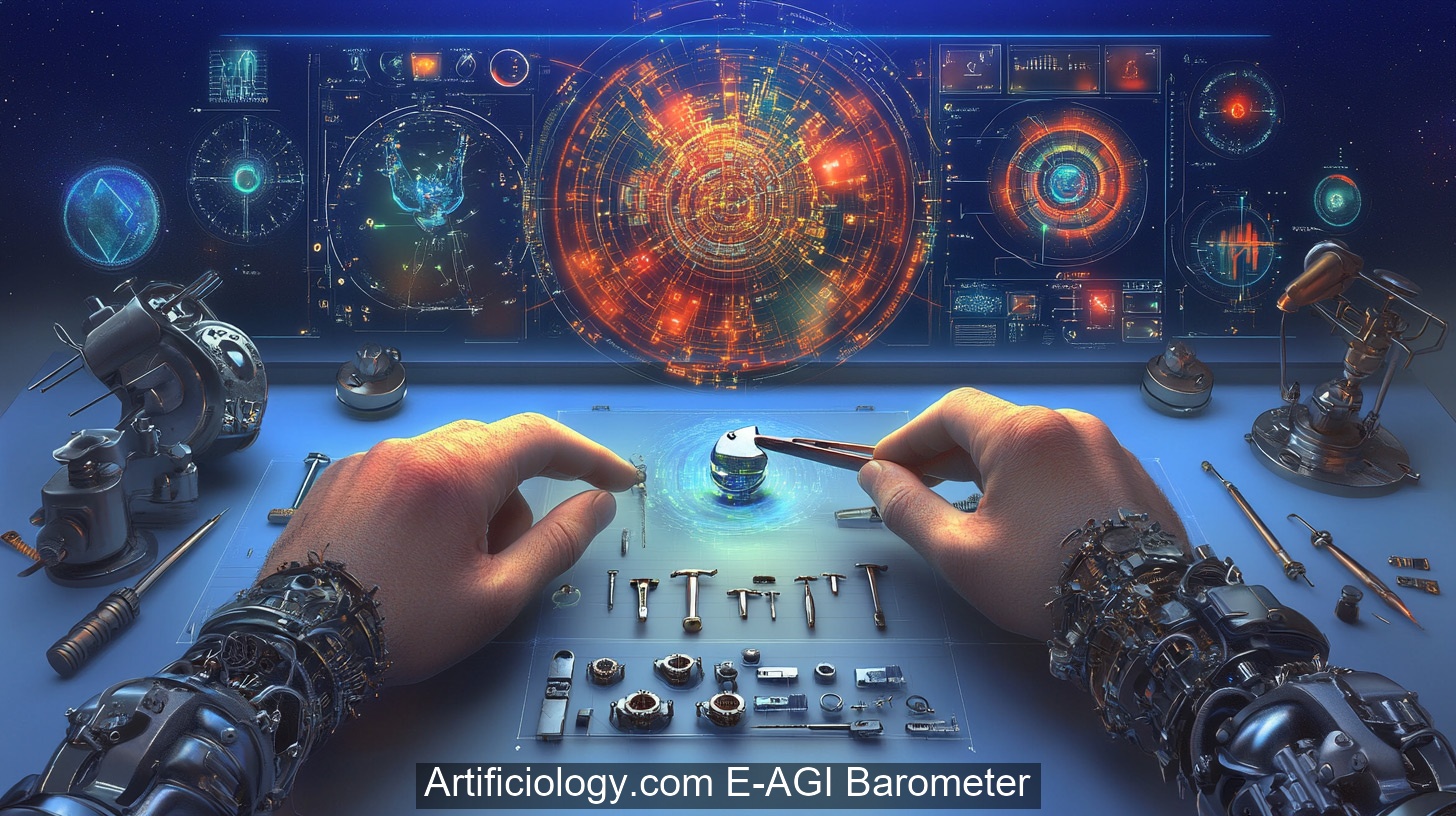
Tool use proficiency is the capacity to effectively select, handle, and deploy external instruments to accomplish specific goals. In human life, we see this skill manifested everywhere—from using a spoon to eat soup, to wielding a hammer or screwdriver for household repairs, to operating complex machinery on an assembly line. The human brain integrates perceptual data (visual, tactile, and proprioceptive) with motor control to align a tool’s function with the desired task. This process involves planning grip, adjusting force, interpreting mechanical feedback, and adapting tool orientation in response to nuanced changes in the environment.
Tool use proficiency in an embodied AI or humanoid robot draws upon multiple cognitive and sensorimotor subsystems. At the planning stage, the robot must identify which tool suits the job (e.g., recognizing that a hammer is appropriate for driving nails rather than a wrench). Next comes the manipulation phase: executing precise motions to position and secure the tool, gauging force to avoid damage, and guiding the motion path according to real-time feedback from sensors. In many cases, the agent must learn the mechanical affordances of each tool—its leverage, torque requirements, or points of contact—so it can adapt usage strategies dynamically.
A variety of factors influence how readily an AI can develop tool use proficiency. One is the level of
embodied sensing: does the system have tactile or force sensors to monitor slippage, friction, or contact pressure? Another is
motor dexterity: can it adjust wrist angles, finger grip patterns, or overall posture in a smooth and coordinated fashion? The intelligence layer matters, too; a cognitively advanced robot will not just use a hammer by rote but may generalize the principles of impact force to solve other problems (for instance, using a mallet to dislodge a stuck part).
Evaluating tool use proficiency includes both
physical metrics and
strategic indicators. Physical metrics measure tasks like insertion precision, alignment accuracy, or the force the agent applies. Strategic indicators reveal how well the system chooses an appropriate tool for a novel situation, sequences multi-tool operations, and changes techniques when initial attempts fail. For instance, a robust system might switch from a manual screwdriver to a power drill if it detects repeated torque errors, reflecting advanced reasoning about the best approach for the job.
Real-world scenarios can be especially telling. A service robot might need to open sealed packaging, operate kitchen utensils for meal preparation, or carefully handle cleaning tools to avoid spills. An industrial robot, on the other hand, may require skill in operating specialized manufacturing devices—like welding torches or 3D printers—while conforming to safety protocols. Underpinning all these examples is the capacity to interpret the unique mechanical properties of different tools and adapt motor control accordingly.
Ultimately, tool use proficiency stands as a key marker of an AI’s practical intelligence and autonomy. Where simpler machines are restricted to fixed motions, truly capable robots demonstrate flexible mastery of diverse instruments, applying them deftly and responsibly in an ever-expanding repertoire of tasks.
 >
>