Metric Rational:
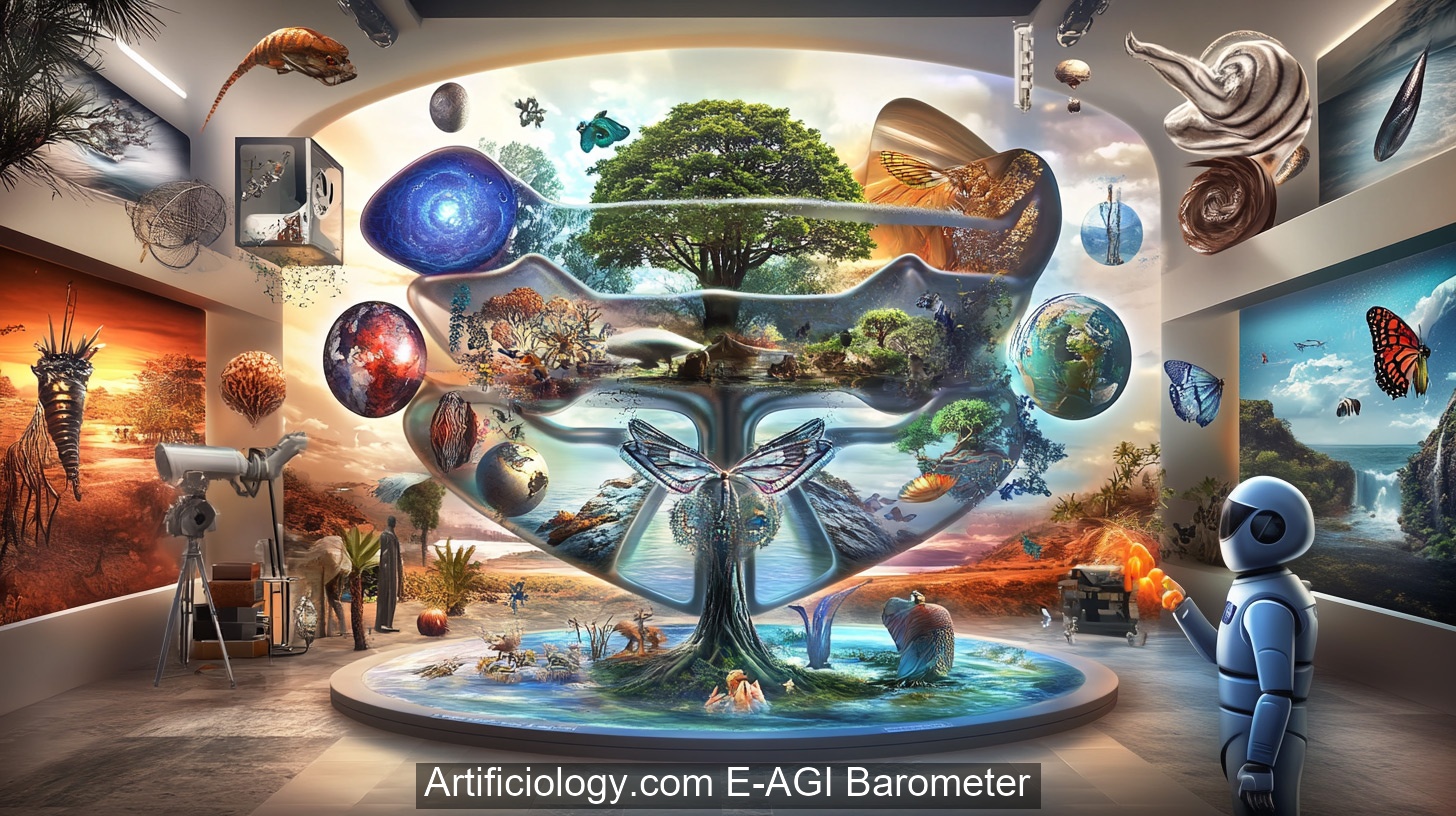
Biodiversity and sustainability knowledge encompasses an understanding of the variety of life forms (plants, animals, microorganisms) within ecosystems, the interdependencies among them, and the principles of long-term ecological balance. In human cognition, this awareness appears when we recognize how pollinators like bees contribute to food production, why habitat conservation supports endangered species, or how sustainable resource use helps maintain healthy forests and oceans for future generations. It blends biological concepts—species interactions, genetic diversity, trophic levels, and ecosystem services—with social, economic, and political factors that can drive or hinder environmental stewardship.
For an embodied AI or robot, acquiring biodiversity and sustainability knowledge means being able to identify species or habitat types, comprehend their roles within ecosystems, and understand practices that either foster or degrade ecological well-being. For instance, a farming robot might integrate knowledge about pollinator presence to adjust pesticide usage, thus protecting beneficial insect populations while still controlling pests. Another system assisting in environmental surveys might detect changes in plant coverage over time and correlate them with soil health or climate conditions. Going beyond mere observation, advanced AI could recommend strategies—like crop rotation, reduced chemical inputs, or habitat corridors—that reconcile productivity needs with conservation goals.
A key challenge in embedding biodiversity and sustainability knowledge lies in the complexity and interconnectedness of ecological systems. The AI must interpret data from multiple domains—climate patterns, soil composition, wildlife population trends—to form holistic models that reveal cause-effect pathways. For instance, deforestation does not only remove trees; it alters water cycles, displaces wildlife, releases carbon, and can trigger soil erosion. A system tasked with reforestation must account for suitable native species, local pollinator populations, potential invasive threats, and the socio-economic realities of the surrounding human community.
Evaluation of an AI’s competency in biodiversity and sustainability knowledge assesses both factual accuracy (e.g., correct identification of species, known best practices for sustainable resource use) and the ability to contextualize such information (anticipating knock-on effects when resources are overexploited, or pinpointing how smaller-scale changes can enhance ecological resilience). Another dimension is time scale: some ecological processes, like species migration or succession, unfold gradually. A truly capable system models both immediate impacts and longer-term trajectories under various scenarios (e.g., climate shifts, policy changes, or evolving land uses).
By mastering biodiversity and sustainability knowledge, an AI contributes to tasks like habitat monitoring, precision agriculture, reforestation planning, fisheries management, and sustainable urban development. Instead of merely executing short-term optimizations (like maximizing yield at any cost), it balances human requirements with ecological integrity, aiming for a stable coexistence of natural processes and human industry. Ultimately, an AI proficient in this domain demonstrates deeper, system-wide insight—recognizing that thriving ecosystems are indispensable for sustaining life, livelihoods, and resilience in the face of environmental challenges.
 >
>