Metric Rational:
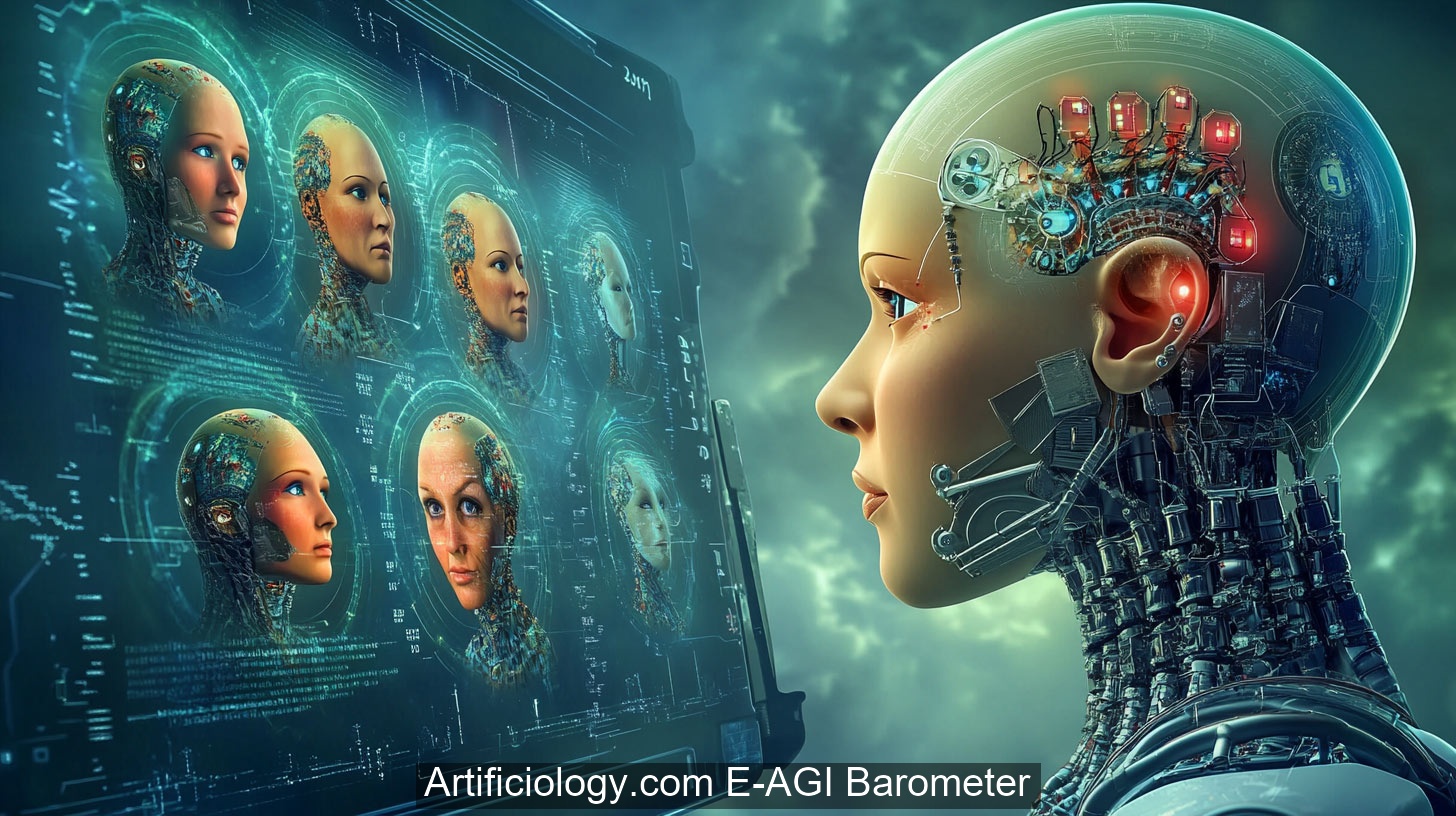
Facial expression detection is the ability of a system—human or AI—to recognize and interpret the emotional or situational cues reflected on a person’s face. Humans perform this naturally, reading subtle movements of eyebrows, eyes, and mouth to gauge another person’s emotional state, whether joy, sadness, anger, or confusion. Capturing these signals fosters empathy and more effective communication. For an AI or humanoid robot, detecting facial expressions broadens its capacity to respond sensitively, adapt behavior based on perceived user feelings, and enhance social interactions.
From a technical standpoint, facial expression detection requires several steps. First comes face localization, ensuring the system finds and tracks one or more faces in a video stream or image. Once a face is identified, the AI typically measures key points, such as the corners of the eyes, positions of the eyebrows, and the shape of the mouth (facial landmarks). In more advanced setups, 3D modeling or muscle movement analysis offers deeper insight into micro-expressions—brief flickers of emotion that reveal hidden states. Next, a classification model categorizes these observed features into known emotional labels, like happiness, surprise, or fear.
One challenge in facial expression detection is variability. People differ in how they display emotion; cultural norms or personal habits influence expression intensity and frequency. Light conditions, head orientation, and occlusions (glasses, masks, or hair) can also obscure cues. A robust system handles partial data, normalizing or aligning faces before classification. Another issue is ambiguous or blended emotions: real life rarely confines itself to pure “sadness” or pure “happiness.” Systems thus should allow for multi-label or nuanced confidence scores (e.g., 60% angry, 40% frustrated).
Beyond raw detection, context plays a role in interpreting expressions correctly. A wide-open mouth could be either a sign of surprise or a yawn of tiredness, and the surrounding situation might decide which. Integrating signals from other modalities—like voice tone or posture—can sharpen accuracy. Additionally, continuous monitoring across time helps, as an expression that persists might differ from a transient flicker (which could be involuntary or misleading).
Evaluating facial expression detection involves metrics like accuracy, precision, and recall for recognized emotions, as well as the system’s ability to handle varied lighting, angles, and occlusions. Researchers watch for bias in datasets: if training data is skewed toward certain ethnicities or age groups, performance may suffer outside that scope. Systems must handle real-world complexity, where users might deliver subtle half-smiles, partial winks, or micro-expressions that require rapid recognition.
Ultimately, well-tuned facial expression detection can improve user experiences dramatically. A caring companion robot might see a user’s sadness and offer support, or a virtual agent might adjust its tutorial style upon spotting frustration. By discerning emotional states in real time, AI can adapt responses, show empathy, and personalize interactions—integral steps toward genuine social intelligence.
 >
>